
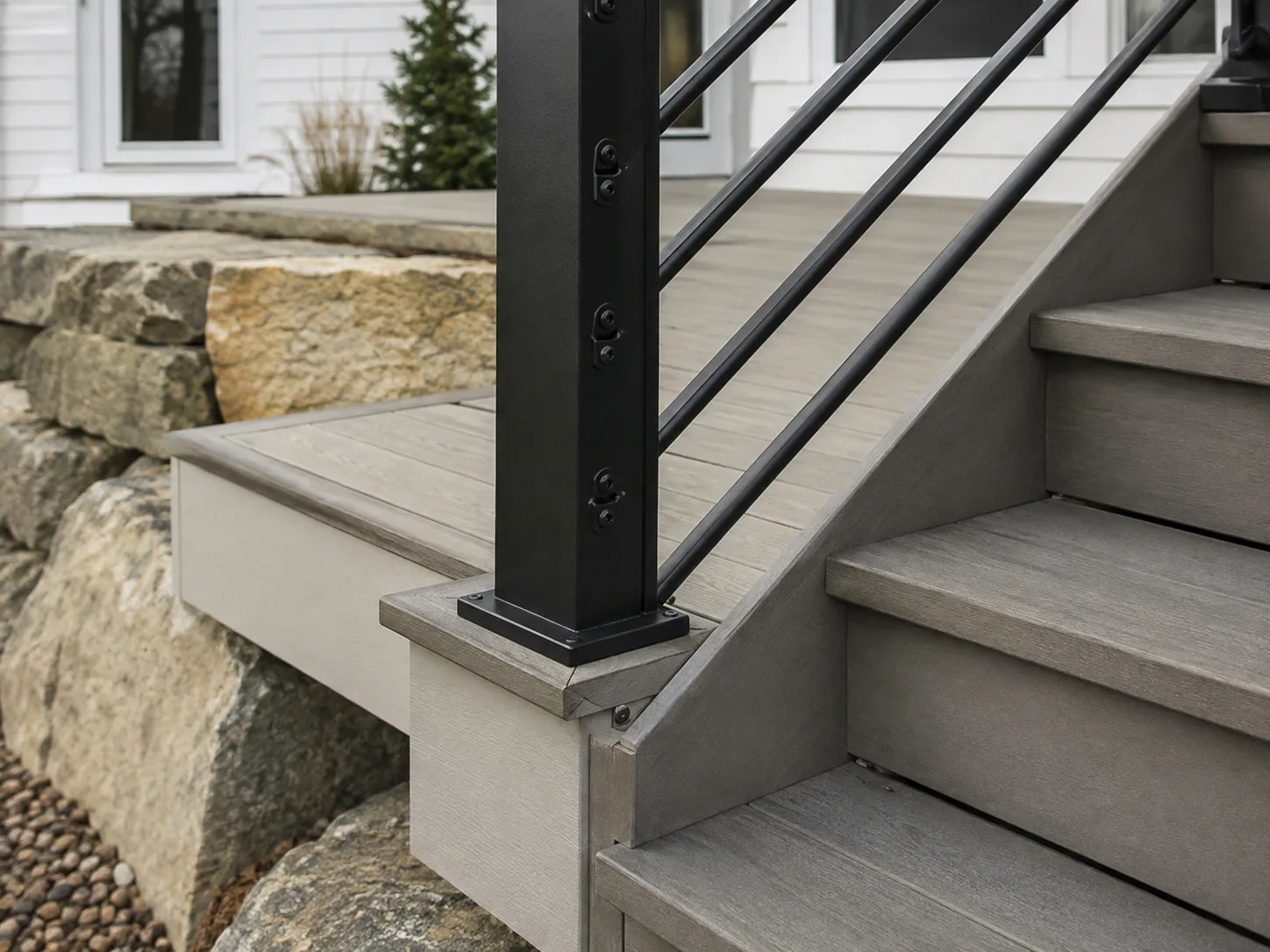
Composite can go on a serviceable existing deck frame after the old boards are removed. Joists, beams, posts, footings, ledger, flashing, stairs, and rail connections must be evaluated before expensive finish boards conceal them again.
What should be checked before a composite deck resurface?
The condition of each framing component matters, but so does the assembly. Joists need appropriate spacing and a consistent plane. Connections must be sound. Water needs a path away from the house. Posts and footings should not show movement or settlement.
- Ledger attachment and flashing at the house
- Joist condition, spacing, blocking, and flatness
- Beam, post, footing, and hardware condition
- Stair stringers, landings, and rail-post connections
- Ventilation, drainage, and places where debris collects
What else changes when a wood deck becomes composite?
Resurfacing is more than exchanging boards. Composite products have specific requirements for spacing, fastening, breaker boards, overhangs, stair treads, fascia, and ventilation. A new railing system changes post locations and edge details. Dark colors can also behave differently in direct sun.
Product selection belongs after the frame decision so the installation details can be priced as one system.
When is full deck replacement better than resurfacing?
Replacement becomes the clearer investment when repairs spread across the frame, the house connection is questionable, footings have moved, stairs need major reconstruction, or the remaining structure is unlikely to justify the lifespan and cost of the new finish.
Layout matters too. Preserving a structurally adequate frame can still be poor value when it locks the home into narrow stairs, unusable dimensions, or circulation that has never worked.
Confirm the frame before following product installation instructions.
Composite manufacturers publish product-specific installation requirements. For an overview of the resurface sequence, see TimberTech’s guide to replacing wood boards with composite. The existing structure still needs a project-specific evaluation.
Common questions
Can composite decking be installed over existing wood boards?
The old deck boards should be removed. The exposed framing must then be evaluated, repaired where appropriate, and prepared to meet the selected product's spacing and installation requirements.
Can old railings remain during a deck resurface?
Possibly, but rail posts and connections need to be evaluated with the deck. Keeping an older rail system can also complicate board layout, waterproofing, fascia, and the finished appearance.
How long does an existing frame need to last?
Long enough to justify the new surface system. Remaining service life, not just present-day strength, matters because composite boards may outlast framing that is already well into its useful life.