
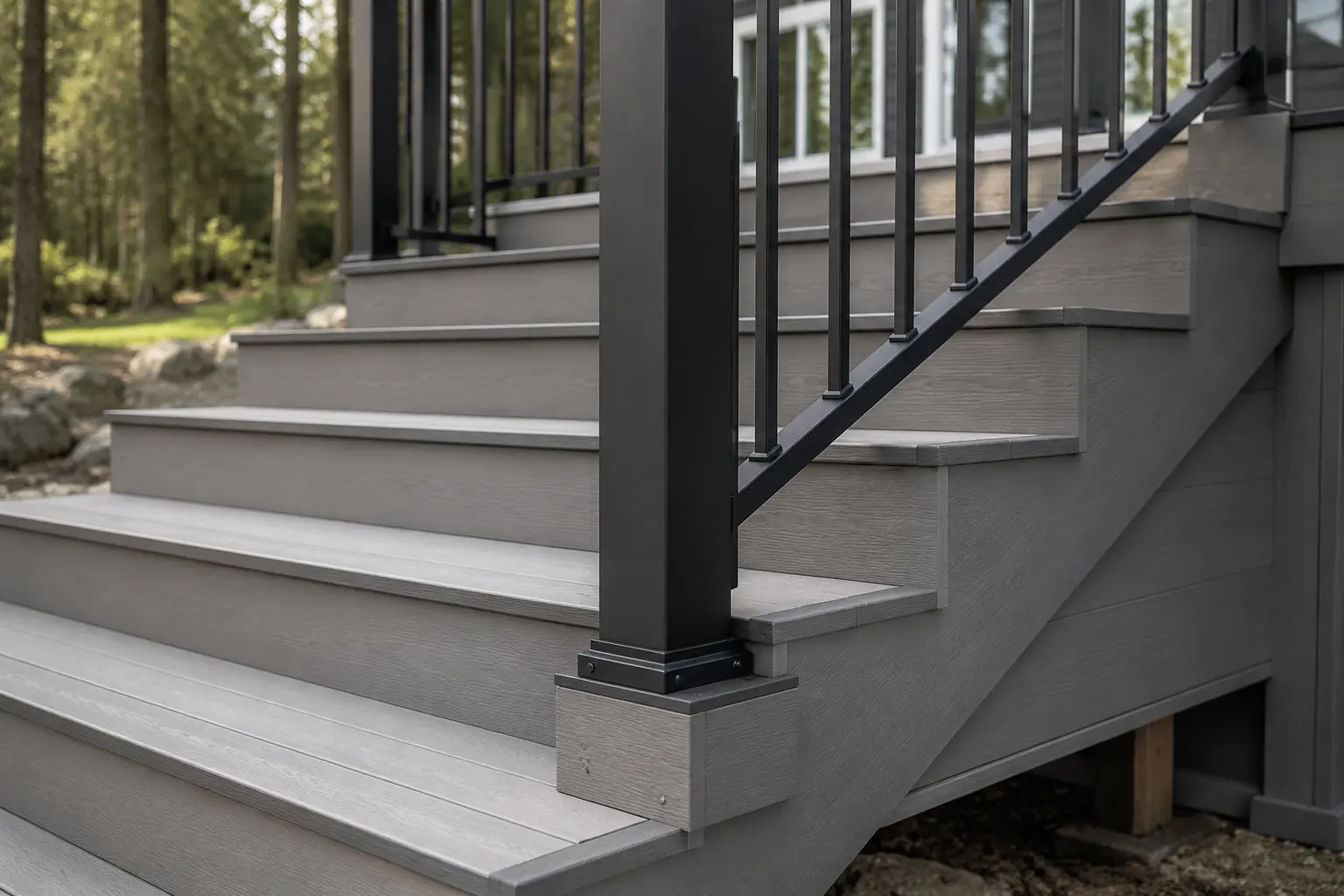
A loose rail or failing stair can be a local problem, but it can also reveal weak blocking, deteriorated framing, movement at the deck, or an assembly that needs reconstruction. Diagnose the connection before choosing the replacement part.
Why does a deck railing move?
Movement can begin at the post, the framing that supports it, the rail-to-post connection, or deteriorated material. Surface-mounted and through-framed systems load the deck differently, so the visible hardware does not tell the whole story.
A useful scope identifies how the new or repaired rail will transfer force into sound framing and how the attachment will be protected from water.
What makes deck stairs safe and comfortable to use?
Consistent risers and treads matter, but so do width, headroom, hand contact, stringer support, the top connection, and a stable landing. The direction of the stairs affects how the deck meets the yard and how much usable floor area remains above.
Winter conditions make drainage and reliable hand contact particularly relevant in Maine. Material edges, tread depth, and the transition to the landing should be considered as one walking route.
When can stairs or railings be repaired on their own?
A focused repair makes sense when the problem is defined and the supporting deck is sound. Larger reconstruction is more appropriate when the stair opening, rim framing, posts, or surrounding boards cannot support the new work—or when several parts have reached the end of their useful life together.
Which deck railing material should a homeowner choose?
Wood can integrate naturally with a pressure-treated deck and is straightforward to modify. Composite, vinyl, cable, and metal systems provide different sightlines, maintenance needs, post spacing, fastening, and cost. The best choice depends on the house, view, deck height, and structure available for attachment.
Common questions
Can a loose deck railing be repaired?
Sometimes. The repair depends on why it moves and whether the surrounding framing can support a reliable new connection. Tightening visible fasteners is not a durable answer when the post attachment or framing is the source.
Why do deck stairs feel uncomfortable even when they look intact?
Inconsistent rise, tread depth, slope, narrow width, handrail geometry, or an awkward landing can make stairs feel wrong. Movement in stringers or their connections can add a separate structural problem.
Can railings be replaced without replacing deck boards?
Possibly. Post locations, blocking, board condition, fascia, waterproofing, and the chosen railing system determine how cleanly a new rail can connect to the existing deck.